Roses of the South
Our host nation for the 77th Officers’ Ball, Italy, is the most popular holiday destination for Austrians. In addition to breathtaking beaches and bays, beautiful landscapes and many cultural treasures, we are particularly enchanted by the cheerfulness and joy of our Italian neighbours and their love for the finer things in life. And it is precisely these emotions that we want to experience together with you during a glittering ball night.
Italy has been linked to Austria in many ways for centuries. One connection to Italy in musical terms dates back to 1880, when Johann Strauss Jr. composed the waltz ‘Roses from the South’. He dedicated this waltz, with its wonderful melodies, to the then Italian King Umberto I.
The rose, as the queen of flowers, is a wonderful symbol of love. And isn‘t a ball night in the magnificently decorated Vienna Hofburg the ideal place to celebrate life with loved ones, friends and partners? So let yourself be carried away to the dance floor to the sounds of Strauss in waltz-time against the impressive atmosphere of the Vienna Hofburg and enjoy an unforgettable ball night!
Timetable – Key data
- Entry: 8.00 pm
- Opening ceremony: 9.30 pm
- End: 4.00 am
Program
9.30 pm Opening Ceremony in the ballroom – Festsaal
Opening Fanfare
Entry of the Young Ladies and Gentlemen’s Committee
Ceremonial entry of the guests of honor
Federal anthem, European anthem
Show Program
Guards band display
“Fächerpolonaise” performed by the Young Ladies and Gentlemen’s
Committee & Dance Performance of the Young Ladies and Gentlemen’s Committee
Welcome Address
Welcome Address by the Chief of the General Staff and
chairman of the „Alt-Neustadt“ Association
Ball opening by Federal Minister of Defence
Opening waltz by the Young Ladies and Men’s Committee
12.00 am
Midnight show “La Dolce Vita”
Audience quadrille
1.30 am Folk Dances “This is Austria”
Performance to dance along
2.30 am
Late Night Show
4.00 am
Taps in the ballroom, Ball finale
All program points can be tracked via video in most ballrooms.
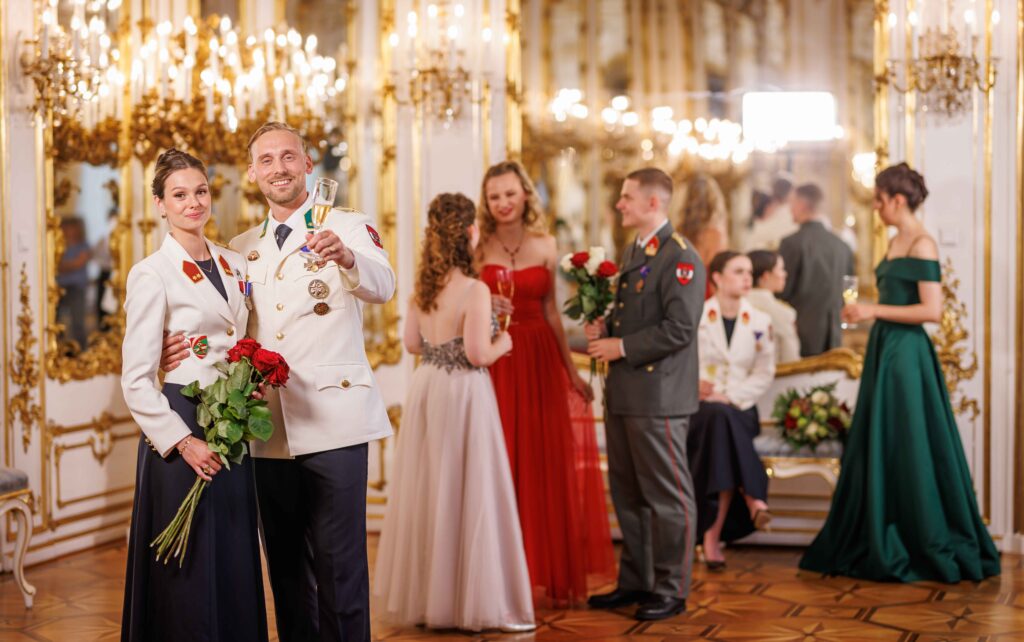
Dresscode
Ladies: Large Floor Length Evening Gown, Uniform (Large Formal Suit)
Gentlemen: Tailcoat, Tuxedo, Uniform (Large suit)
The Ball Committee reserves the right to deny access to persons in non-matching clothing!
We invite you to scroll through our picture gallery of the last Officers’ Ball to get some suggestions
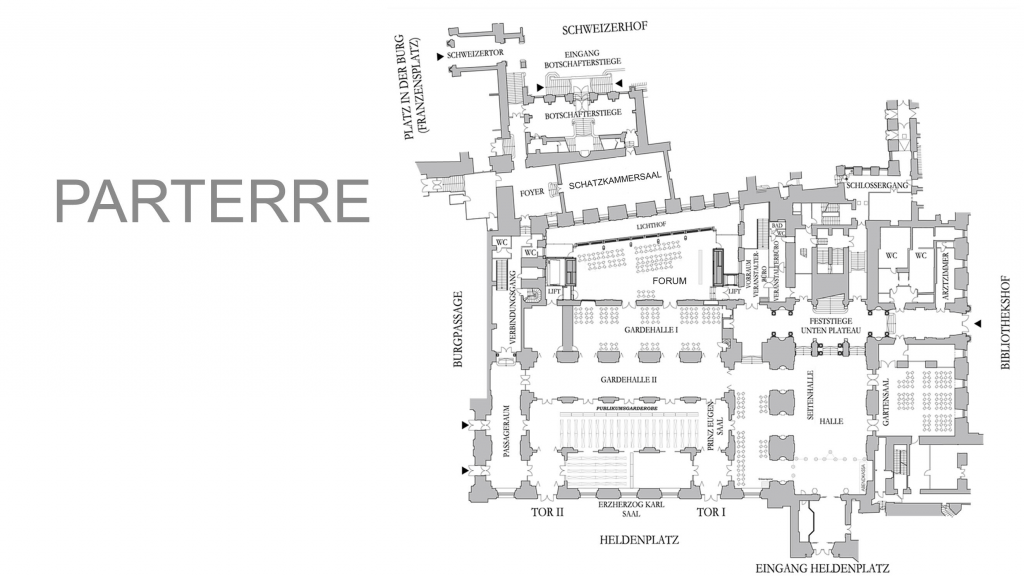
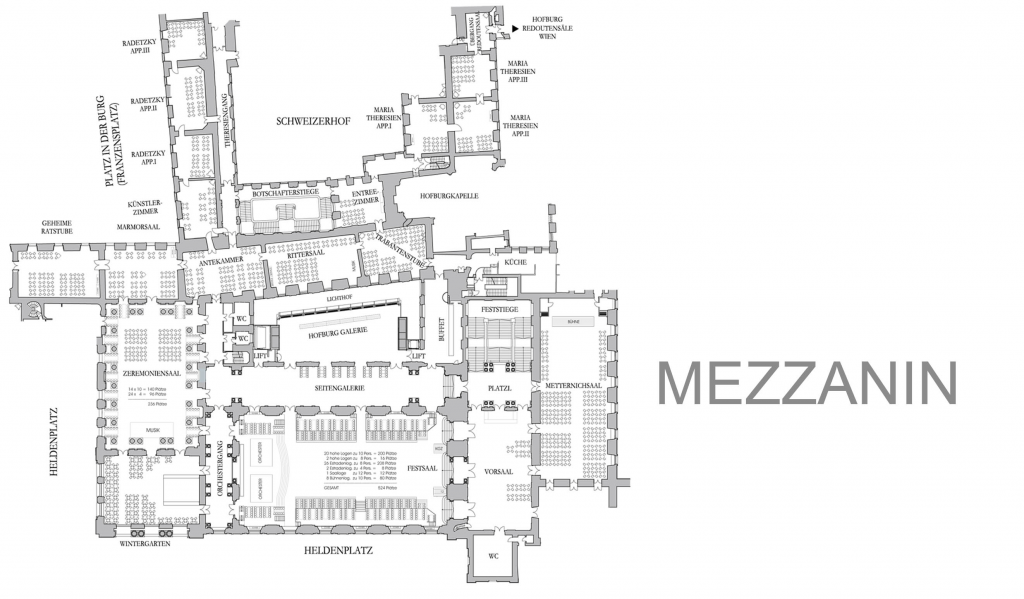
Floorplans
Zoom function: Move your mouse or finger over / on the plans to see details